I’m best where creative judgment and systems thinking have to live in the same head. Find the pain point, write the hook, build the thing that tells you whether the hook worked, then test it ten other ways to be sure.
Most of the useful stuff comes from being curious about things that have nothing to do with advertising. A creator that only draws on their own taste ends up making ads for themself, which is how you get a campaign everyone in the room loves and nobody outside it clicks. I don’t run a team from the top, because I know a diverse collection of perspective and experience, matched with data you can trust, and a way to learn directly from your audience is the best way to succeed in advertising.
My strengths and my limits: I own our statics. I’m a close collaborator on video through script writing and some directing. Our copy team reviews what I write and our department head owns the budget and the final call. My paid depth is Meta, not TikTok. I’m a photographer and not a video editor, although I have some experience with simple animations and on-screen graphics. I wouldn’t call myself a copywriter, but I have the ideas to get a script built, and the taste to edit it to sound human.
Selected work
Musora · 2021–2026
01 · Audience
Meta kept handing us people twice our target age
For as long as we’ve been able to track the data, our Meta-determined audience has skewed old. 45 to 54 was the sweet spot and 55 plus was right behind it, which has been great for building our business so far, but we have been trying to turn our younger YouTube audience into paying customers and have had a tough time finding the best way to do that. Meta kept delivering our ads to who it thought would buy, and that kept being Gen X and Boomers.
My read was that the polished, branded, obviously-an-ad variants were doing the sorting for us. A 58-year-old will happily sit through a nicely made commercial. A 28-year-old scrolls past one.
I pushed for comedy, skits, lo-fi, and UGC and EGC style cuts, things that look like they belong in the feed instead of interrupting it. The statics stayed mostly polished and on-brand, because that’s where the brand actually needs to hold. The video team changed tack and started building for the feed.
Share of delivery by age
18 to 44
40 → 53%
45 to 54
21 → 21%
55 and over
39 → 26%
Where Meta chose to spend the money. The tick is the two months before, the bar is the most recent 30 days. 13 points moved out of 55 plus and 13 points landed in 18 to 44. Scale 0–60%.
August 2026 vs August 2025
Trial starts per 1,000 impressions
2.43×
Thumbstop rate
1.34×
Trial starts
1.32×
Cost per trial start
0.59×
Last year = 1.00, scale 0–2.5×. Same month, same place in the year, no sale in either one. We spent 22% less, bought 45% fewer impressions, and got 32% more trial starts out of it. Up is better on the first three and down is better on the last one.
Trials per thousand impressions is more than doubled, and that one doesn’t care how big the budget was. Click-through went from 2.10% to 2.68% over the same comparison.
02 · Test design
One pain point, six angles
Bar chords are where beginner guitarists quit. It’s not a metaphor, it’s a specific thing your hand won’t do yet, and a lot of people quietly decide at that point that they’re not a guitar person after all.
This static went out in July and beat everything else in its set. On its own that means nothing, but it had me curious, so I pushed to point the next testing round at that one barrier and nothing else.
Origin. July 2026. The whole round came out of this one ad.
Six angles went out as 11 statics and 10 video cuts.
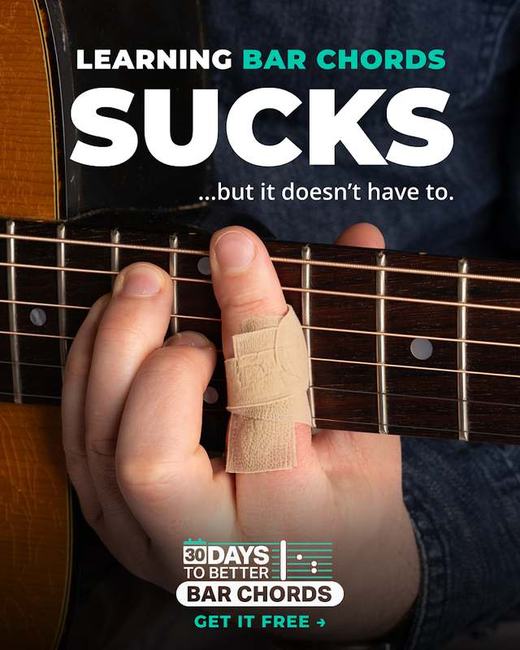
“Learning bar chords SUCKS” made the best static of the lot, and it nearly didn’t run at all. Our CMO thought the language was too harsh. I pushed to keep it because it’s how the instructor actually talks, and because a campaign from years back had already told us this register works and we’d just forgotten.
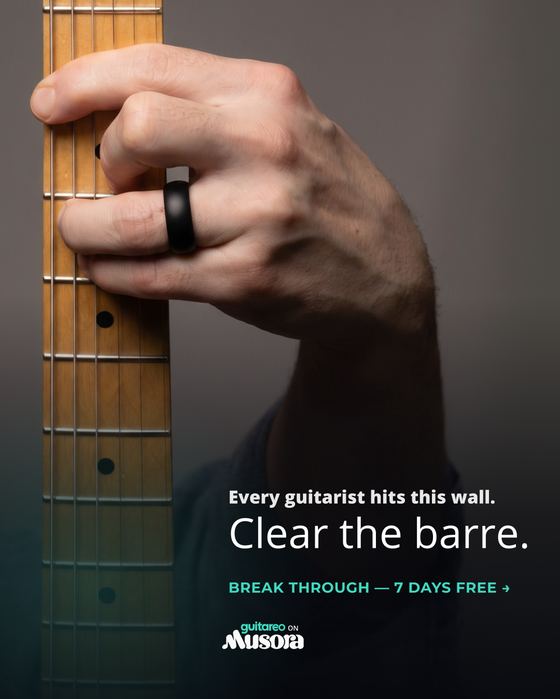
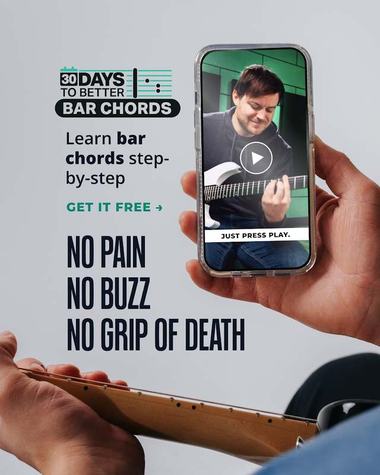
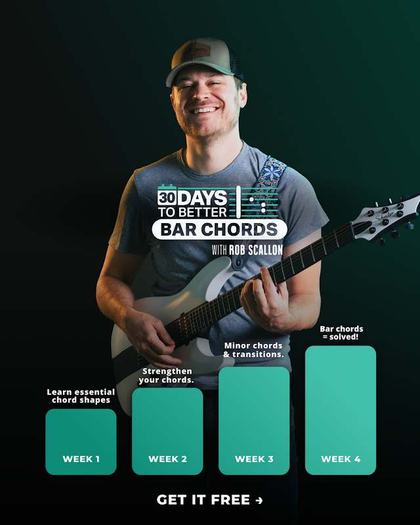
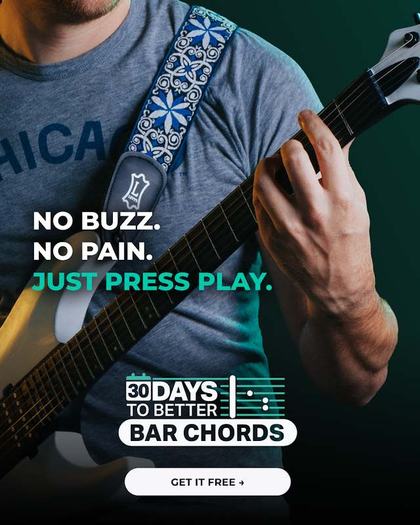
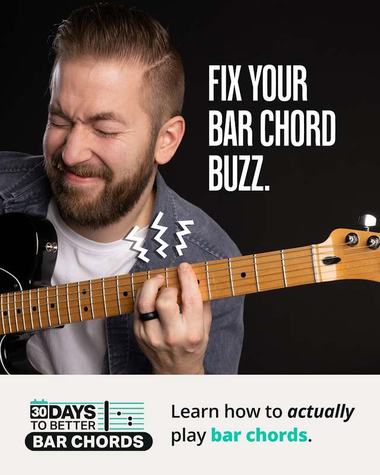
“Learning bar chords SUCKS.” The one that nearly got cut. 3.01% click-through and 1.13× trials against spend, the best static of the 11.Get it free, point. 1.29% click-through · 1.07× trials per spend · 34.9% share of spend.No grip of death. 1.95% click-through · 0.98× trials per spend · 4.7% share of spend.Four-week chord. 2.14% click-through · 1.68× trials per spend · 0.7% share of spend.Press play. 1.84% click-through · test spend only · 0.3% share of spend.Fix the buzz. 1.60% click-through · test spend only · 0.1% share of spend.
The rest of the set
Five more of the 11 statics. All mine, concept through build. The bottom two barely ran, so read those numbers as a look rather than a result.
Look at my hand. 46.6% thumbstop · 0.55× trials per spend · 8.5% share of spend.Repair shop. 41.4% thumbstop · 1.10× trials per spend · 15.8% share of spend.The F chord. 35.8% thumbstop · 0.87× trials per spend · 12.0% share of spend.This is the sound. 35.4% thumbstop · no trials · 1.2% share of spend.We talking bout practice. 31.6% thumbstop · no trials · 1.5% share of spend.Progress halter. 31.0% thumbstop · 1.31× trials per spend · 5.3% share of spend.The fly. 30.2% thumbstop · 2.17× trials per spend · 2.7% share of spend.Excuses. 26.0% thumbstop · no trials · 0.6% share of spend.We talking bout practice, short cut. The short version of the same hook.
Video
All 10 cuts, built by our video team to angles I set. Thumbstop is 3-second plays over impressions. Trials over spend is an ad’s share of the set’s trial starts divided by its share of the money, so anything above 1.00 paid for itself.
Naming the exact technical failure, the buzz, the F chord, the grip of death, made the strongest hooks by a distance.
Attention and trials came apart almost entirely, and you can read it straight down the grid. The cut that held the most people returned the least of anything we funded. The one that returned the most is sitting seventh on attention. I don’t have a tidy explanation for that yet and I’d rather say so than invent one.
And the angle my team normally bets on, the demographically precise one aimed at stuck intermediates in their forties, did nothing at all. It described a person instead of a moment they’d recognise.
Video and statics split the money nearly evenly and came back nearly in proportion, so I can’t tell you one format beat the other. What mattered was which angle you picked.
This launched in early September and is still under our significance floor, so treat all of it as an early read. Ratios instead of counts to protect Musora’s numbers.
03 · Reading the signal
When the variable turns out to be a person
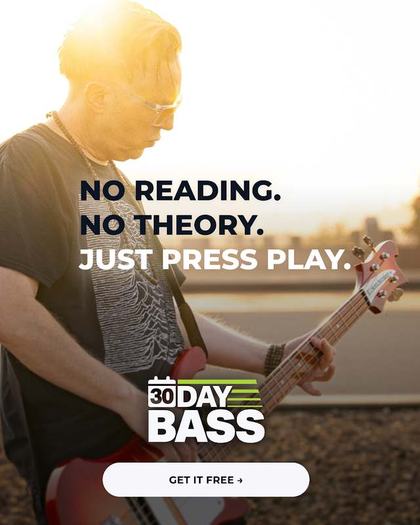
A static was beating everything around it in both spend and trial-starts. Same template, same offer, same messaging angle as the rest of the set (every instrument, and as many demographics as I could test for each). The only thing actually different was the guy in the photo.
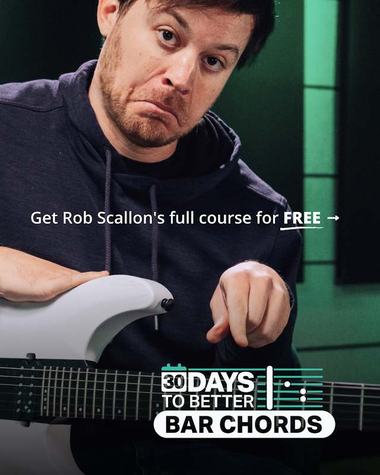
Not knowing if it was a fluke or something about the model, we built a video asset from the b-roll of the same shoot. It’s now the biggest creative by spend in that portfolio, and having a video instead of a static gives far more data to learn from.
The static.The b-roll cut. Repurposed b-roll video ad featuring the same model as the static.
Against the ads running beside it
Thumbstop, against the median of 22 video ads
1.58×
Installs as a share of spend
1.25×
Peer set = 1.00, scale 0–2×. Holding the largest share of the spend and still coming back ahead of it is the harder half of that. These are attention and installs, not revenue, because it ran as an app-install campaign.
He’s booked for an upcoming shoot so we can pull it apart properly and find out whether it’s his face, his energy, or just the room he happened to be sitting in. We will use our best performing hooks, angles and formats, and try on different instruments (the model is a multi-instrumentalist). If it does turn out to be him, that’s a much better thing to own than a concept, because we’ll be burning through concepts forever and he’ll still have that face.
The read and the argument were mine. Our video team cut the footage.
04 · Customer voice
750,000+ student comments, finally readable
Every lesson on our platform has a comment thread under it and some of them go back to 2012. There’s an enormous amount in there about our customers and none of us could read all of it. We would occasionally parse through a few videos to find a nice quote for a sales page, but it was time-intensive and not particularly effective.
So I pulled the lot into a database and built a tool that queries it. 750,000+ comments, five brands, fourteen years.
It isn’t only about the size, it’s also what I threw out. Our student experience team comment constantly and they’re warm and encouraging because that is literally their job. If you leave them in and use it as a source for “student voice” it ends up being your own brand talking back to you. The working set strips staff, moderators and deleted threads.
I can now find the real language our students use, real pain points they are struggling with, and real wins they are experiencing in our app. It has been a game changer for headline writing and scripting in our campaigns.
05 · Creative systems
The boring layer everything else sits on
We could always tell you which ad won. But as a data set, we couldn’t tell you why, because ad names were whatever the person building the thing felt like typing that day.
So I built the naming convention, and then the taxonomy underneath it, and a living document that outlines details from every naming segment. Every ad gets coded for hook tactic, messaging angle, visual format, audience, pain point, offer, and model. So we know whether “Olivia” is a coach, a student, or a celebrity, we know what hooks work best for what audience, and we can parse out whether the ad hit because the offer was great, or failed because the pain point isn’t relevant to the audience.
06 · Creative engine
Ten times the output, no AI-generated photos
Testing at volume turns into a production problem long before it’s a creative one. Dozens of our top of funnel campaigns sat untouched for years because building variants by hand cost more than the variants were worth.
I have been leading the development of an asset manager that holds the whole library, 200,000-odd photographs. Filenames stay exactly as they are but every image gets AI-tagged on upload for shot angle, emotion, demographic, instrument, location, face recognition and quality. I built the catalogue into an automated Figma template so one set of branded static ads of our best performing designs got turned into our entire course catalogue, complete with updated AI generated headlines and hooks.
Two templates, three instruments. The layout and the structure stay put, the photograph and the palette and the line change. Same two people doing the work, roughly 10 times as much of it.
If you can query what’s in the library you can query what isn’t, and what came back was an uncomfortably specific list of the people we can’t currently cast. That list is now the brief for a full day of shooting, so we’re filling holes the data found instead of holes we’d have guessed at, or just casting whoever was available.
The one thing I won’t move on is AI-generated imagery as a subject. As a human-first organization, we pride ourselves on casting real students and representing real human creativity and education. Using AI to get real photographs into templates quickly is a completely different thing from using it to fake the photograph.
In build
A creator programme made of actual students
Most UGC programmes go out and buy strangers who have never used the product. This works for a skin care company, but not for a music education app. Building a UGC program to show the before and after of something you have to really invest time into is a much more complicated challenge.
The people who already use and love Musora are the best people to talk about it, so I’m building this out of our own student base instead of a generic marketplace.
I will thoughtfully select a collection of strong candidates based on customer data inside the community and onboard them with proper audio and video capture tips. Pay them per post and incentivize them with performance bonuses and extra perks. I will provide a weekly brief with hooks, prompts and formats so they’ve got a direction without being handed a script.
Everything lands in the asset manager and gets tagged on arrival, which is the bit that makes it a programme and not just a pile of content, and it means I can trace performance back to an individual hook and give a creator actionable feedback.
This program hasn’t launched yet.
Creator direction
Writing to the person, not the brief
Our roster of partners and coaches runs from classical concert pianists to a Spanish metal drummer with a NSFW personality. You obviously can’t hand those two the same script.
I research their persona and write to it. Vocabulary, pacing, format, hook, all of it shifts depending on what their audience already expects from them. Threading the needle of our brand voice and that of our guest stars develops trust for our brands.
Resume
Laura Scotten
Creative Strategist · Performance Creative · Vancouver, BC
I own the static ads on a five-brand music-education platform and build the systems the rest of the team briefs from: the creative taxonomy, the asset infrastructure, and a queryable document of 750,000+ student comments to define our customer voice from the source. This year I diagnosed a stubborn audience skew as a creative format problem rather than a targeting one, and moved the delivered audience thirteen points younger while trial starts rose. Twenty-two years in the creative seat, five inside a paid ad account.
Experience
Musora Media2021 – Present
Creative Services Manager, previously Brand Designer; joined as Staff Photographer
Diagnosed an old-skewing Meta audience as a creative format problem rather than a targeting one, argued polished branded work was doing the sorting for us, and pushed the video slate toward comedy, skit, lo-fi and UGC while keeping statics on brand. Share of delivery to 18–44 went from 40% to 53%, 55-plus from 39% to 26%. August year on year, trial starts rose 32% on 22% less spend and trials per thousand impressions more than doubled.
Own the static ad output across five instrument brands, from concept and hook through art direction, build and final review. Closely involved in video: collaborating to set the angles, contribute hooks and scripts, and occasionally produce and direct a shoot end to end. Hooks are written to the performer, with vocabulary, pacing and format moving to each artist or creator’s voice, across a roster from concert pianists to high-velocity YouTube drummers.
Built a queryable store of 750,000+ platform comments spanning 2012 to 2026 across all five brands, plus the AI skill that reads it, with staff and moderator voice stripped out so customer language is not contaminated by our own. Journey friction is now measured from what students write rather than from instinct.
Identified bar chords as an under-attacked beginner drop-off point and designed the test around it: six angles across eleven statics and nine video cuts in one creative production cycle, against one pain point rather than spread thin. Attention and conversion came apart almost entirely, which changed how we brief.
Spotted that an overperforming static was carried by the model rather than the concept, had unused b-roll of him recut as a standalone video ad at no new production cost (about 1.5× the median thumbstop of everything running beside it, now the largest creative by spend in that portfolio), and cast him in an upcoming shoot to experiment with new angles and formats to isolate whether the performance is the person.
Built the company’s ad naming convention and creative taxonomy from scratch: a coded registry covering hook tactic, messaging angle, visual format, audience, pain point and offer type, plus a casting model, so creative is analysed by attribute rather than by filename.
Helped build a custom digital asset manager with the IT team holding 200,000+ photographs and b-roll, AI-tagged on ingest for shot angle, emotion, demographic, instrument, location and quality, so search becomes a query and statics can be assembled programmatically in Figma from real photography. Roughly ten times the output, same headcount, no AI-generated imagery as a subject. Querying the library for who is missing now briefs a full-day shoot against the demographic gaps the data finds.
Tasked with building the creator programme, currently pre-launch: sourced from our own student base rather than a marketplace, onboarding that teaches lighting and sound capture, up-front payment plus membership and bonuses, weekly briefs, and tagging on arrival so performance is attributable.
Run concepting as a team process rather than a top-down brief, pressure-testing concepts with the designer, copywriters and media buyers before production. Built Musora’s brand design alongside our UI designers, manage a graphic designer and run the creative services function.
Two Peas Photography2010 – 2022
Owner-Operator
Ran a wedding, event and commercial photography business for twelve years: client acquisition, pitching, art direction, shooting, post-production and delivery.
Pixilink Solutions2016 – 2021
Photographer
Professional real estate photography at daily volume, to fixed turnaround and consistent output standards.
Michael Tourigny Photography2004 – 2011
Commercial Photographer
High-production product, food and lifestyle photography in a commercial studio, working directly to agency briefs and art direction. Seven years of interpreting somebody else’s brand and somebody else’s brief to a standard the client would sign off.
Education and training
Electronic Media Design Certificate, Langara College, Vancouver
Motion Creative Strategist Bootcamp · Motion AI Strategy Training Club, completed 2026
Capabilities
Strategy. Paid social creative strategy, creative testing frameworks, awareness-stage and funnel mapping, creative taxonomy and naming systems, performance analysis and creative reporting.
Craft. Creative direction, art direction, graphic design, briefing, hook and script writing, brand systems, set design, styling, photography, creator direction, editing AI-generated copy to brand, prompting for high-volume asset creation with human-made creative.
Tools. Meta, Motion, Figma, Illustrator, Photoshop, Lightroom, Jitter, Asana. AI-assisted creative workflows with Claude and MCP integrations, Runneth and Gemini.